Est. 1958
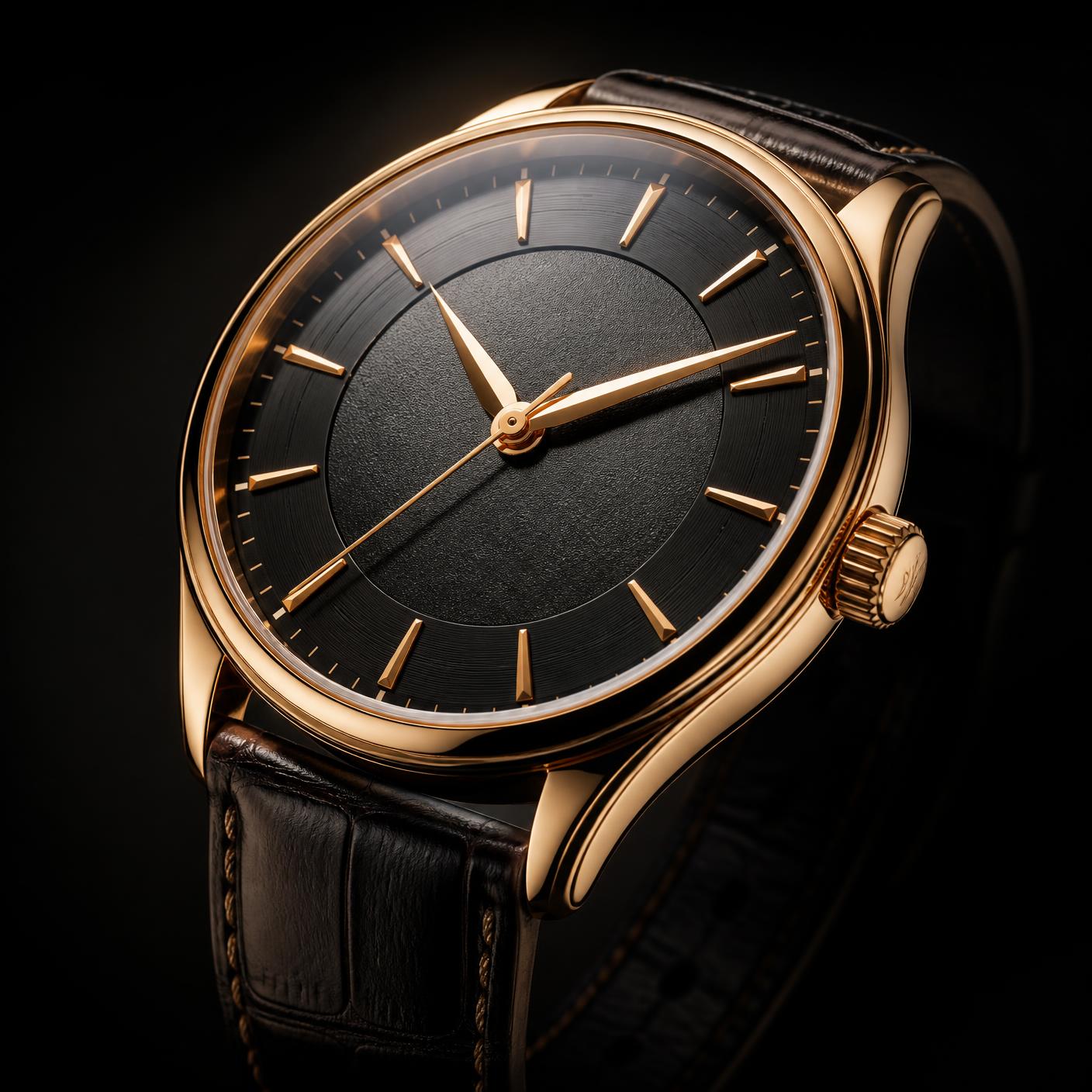
A house built one movement at a time
Craftsmanship
Forty-two hours of hand work in every case
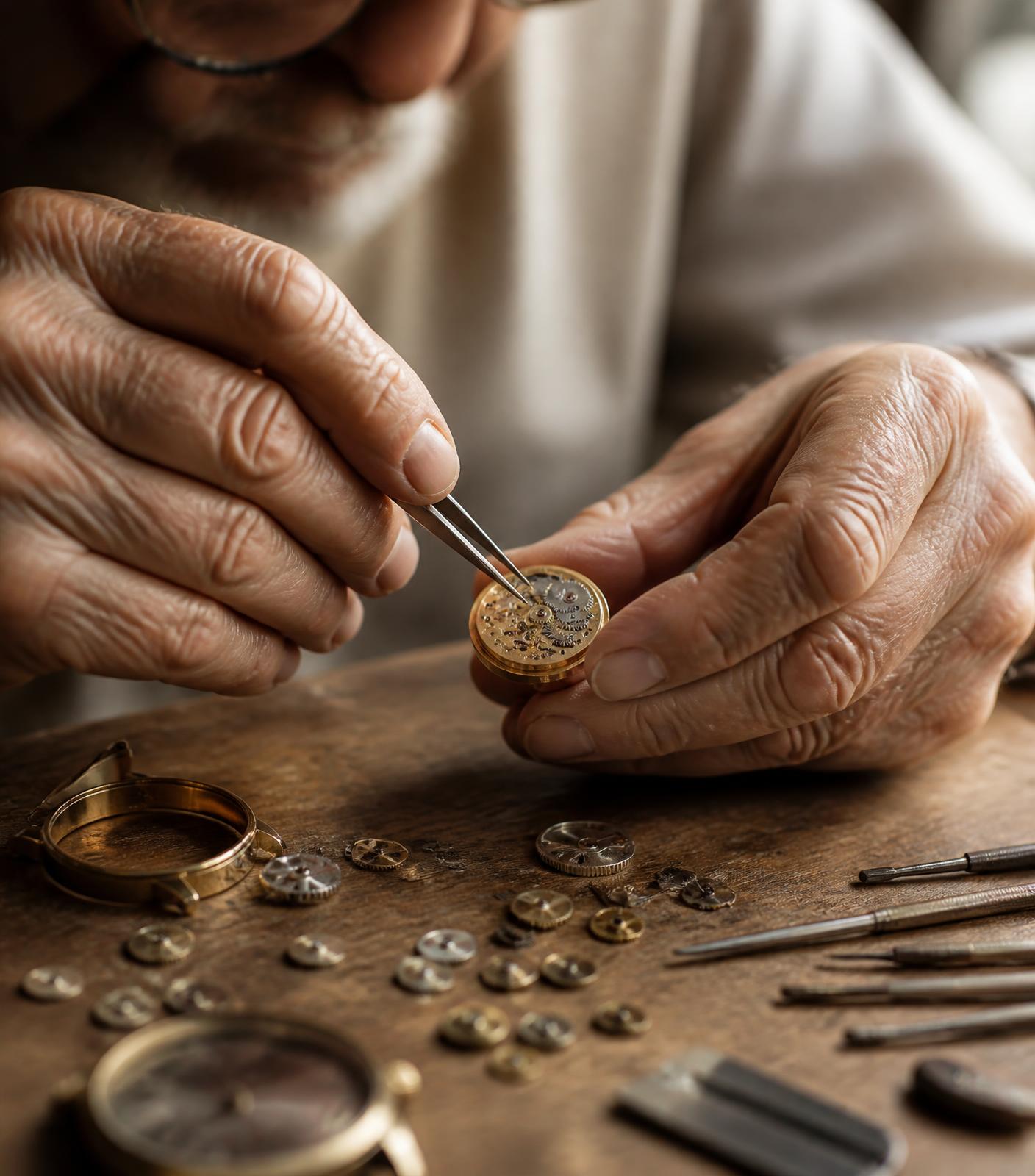
Cases begin as solid billets. They are milled, then finished by hand across nine stages — brushing, bevelling, polishing — until the light breaks across the lugs the way our head watchmaker insists it should.
Movements are assembled, disassembled, and reassembled. Bridges are anglaged with a boxwood tool. Screws are blued in a bench furnace. None of it is faster than doing it by machine; all of it is better.
Every finished watch passes a 214-point inspection and a six-day regulation cycle before it is boxed by the person who built it.
What we hold to
Three principles, unchanged in four generations
01
Patience
Each movement rests for six days on the regulator before it is signed off. Nothing leaves early.
02
Restraint
We remove before we add. A dial earns every marker, every line, every degree of polish.
03
Permanence
Parts are archived for every reference we have ever made, so a watch can always be revived.
Timeline
Sixty-eight years on the same street
- 1958The first atelier opens with three benches and one regulator.
- 1974The Meridian calibre is introduced, still in production today.
- 1996Hand-finishing standards are formalised into our 214-point inspection.
- 2012The Solstice limited series sells out in a single afternoon.
- 2026Nine references, all assembled and regulated under one roof.